Categories
Updates

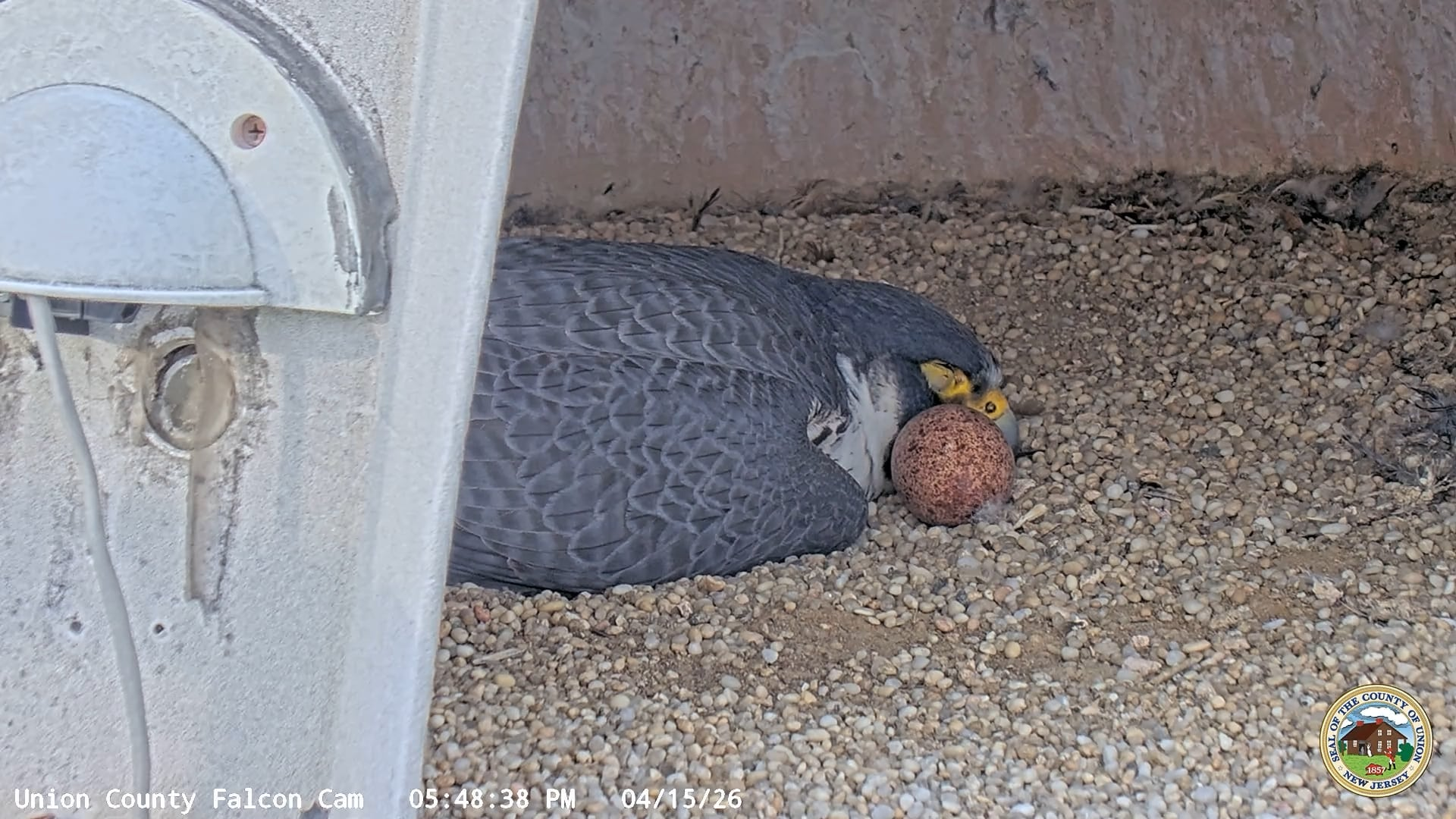
Surprise…there’s five!

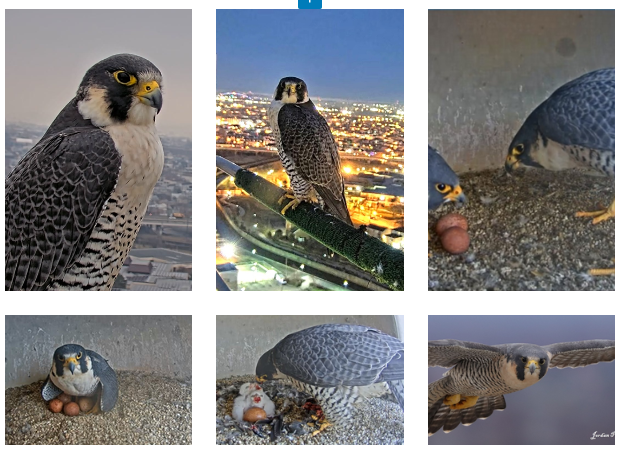
On April 2, at around 6:30am, Lizzie laid her fifth egg. She laid the third (3/28) and fourth (3/31) and still not incubating full time. Five eggs is not uncommon with peregrine falcons. Now they will be devoted to incubating 24/7. The female will do most of the incubation and get some breaks to stretch her wings and feed away from the nest. These incubation exchanges happen several times a day. They will roll and shift the eggs during incubation so they develop properly.

Categories
Updates

And then there were 4 eggs!

A fourth egg was laid on March 30.  Way to go Lizzie!

Stay tuned as we watch the pair take turns incubating these eggs.

According to Ben Wurst, Biologist of Conserve Wildlife Foundation of New Jersey, if all goes well, the eggs will hatch at the end of April.

Categories
Updates

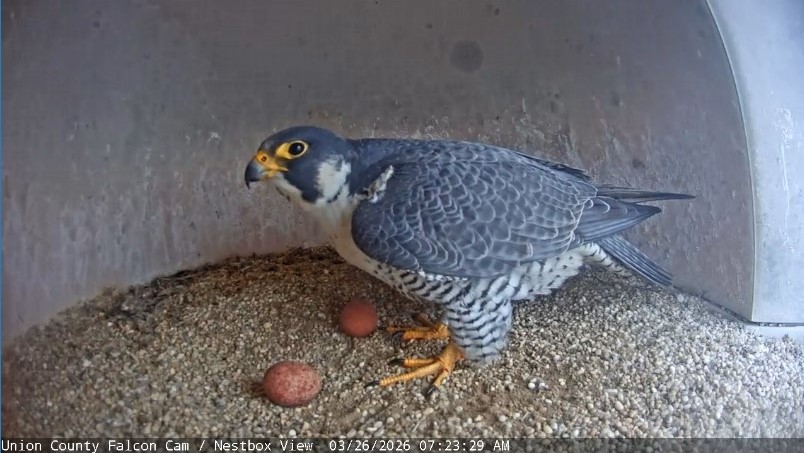
Second Egg

Right on time, the second egg was laid sometime overnight. It was visible early this morning. Lizzie continues to wait before incubating eggs.

During this time food deliveries by Mango are crucial, as the eggs are formed by what Lizzie currently eats. Proteins help build egg white (albumen), lipids (fats) build yolk (energy reserves) and calcium forms the shell! If food is limited then eggs may be smaller or clutches may be reduced.

Categories
Updates

Welcome Lizzie

A new female appeared on the falcon cam around the same time Frida was last seen.  Since this falcon has a federal band 1947-31215 on her leg, the New Jersey State Biologist Kathy Clark was able to determine that “she hatched in 2016 (unknown where) and was captured at JFK Airport and transported/banded in New Paltz, NY, where she was released on August 18, 2016.” 

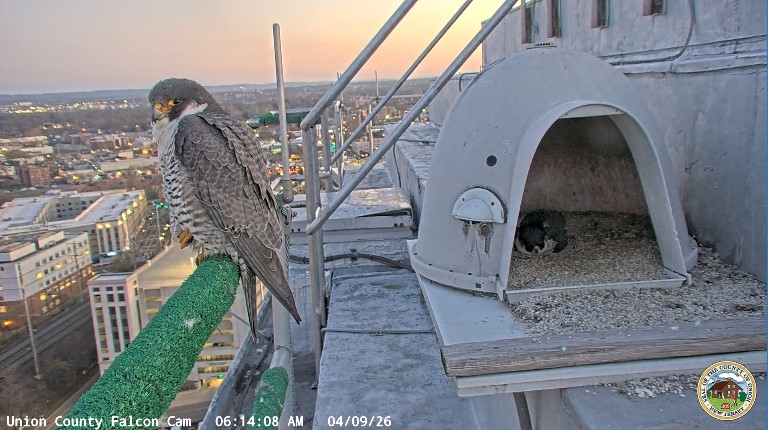
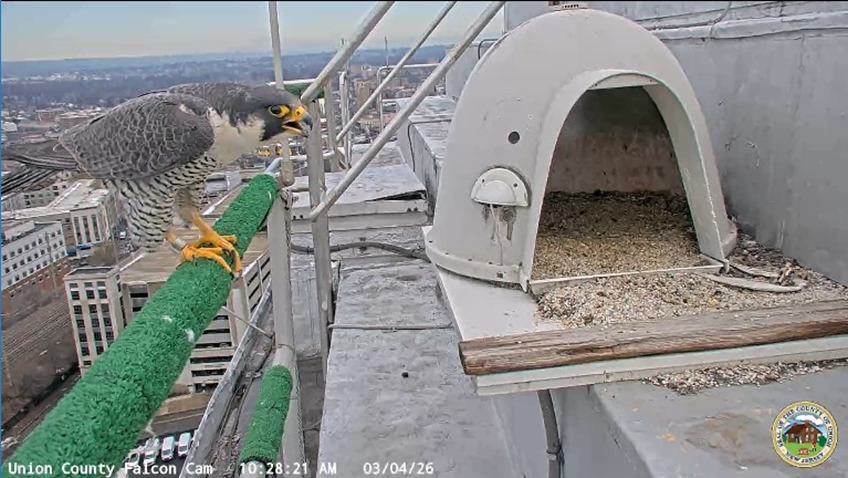
In honor of the city of Elizabeth, the female peregrine falcon is now named Elizabeth or “Lizzie.”  Lizzie and Mango have been seen demonstrating courtship behavior which signifies the beginning of breeding season.

An unbanded female has also been seen on the falcon cam courting with Mango. 

On March 23 around 6:00 PM, Lizzie laid her first egg.  Both she and Mango are taking turns with the egg.  Peregrine falcons will typically lay 3-4 eggs in a clutch, and incubation will begin after the last egg has been laid.  Delaying incubation is a natural adaptation that ensures all eggs hatch around the same time, giving all chicks a better chance of survival.

Stay tuned as this peregrine falcon story unfolds…

Categories
Updates

Farewell Frida

As of mid June 2025, we are sad to report that Frida, the female falcon, has not been seen on the Union County falcon cam, located on top of the Courthouse in the city of Elizabeth.  For approximately six years, we have watched Frida successfully raise 26 chicks in this rooftop nest with Mango, the male falcon.

According to the New Jersey Department of Environmental Protection, the peregrine falcon is listed as a threatened species in the state of New Jersey.  Frida was observed to be a fierce protector of this important urban nesting site. 

Categories
Updates

Winners of the Naming Contest for our Falcon Chicks

Categories
Updates

June Fledgling Update

It’s been a while since the last update. Since then all young have fledged. Thank you to Kathy Clark with NJDEP for the timeline of events that followed:

  • 6/10 – 3 of the 4 had fledged, and BK/10 male had fledged around 6/5
  • 6/12 – all 4 fledged, *probably including BN/62, the last-hatched
  • 6/13 – last date any fledglings were seen on camera

There were few sightings of Frida and Mango after the young fledged.

New female perched on railing. June 24, 2025.

A week later, a new *banded* female was observed by viewers. She has been observed courting with Mango. This is clearly the reason why we haven’t seen the fledglings or Frida. We have not received any reports of them being found nearby. As Kathy stated in an email, “this isn’t a good sequence of events for the fledglings.” At this point it is unclear where they have gone and if they are still alive. Since they were banded, they can be traced back to this eyrie. We can only hope that they are alive and well. As we stated in a previous post, this urban nest being productive is really crucial to maintaining the falcon population in New Jersey with coastal nests being abandoned.

Courting with Mango in nestbox. June 23, 2025.

About this new female. Since she is banded, we know more about her. She only has a federal band but with the camera, Kathy was able to read the band – 1947-31215. Kathy reported that “she hatched in 2016 (unknown where) and was captured at JFK Airport and transported/banded in New Paltz, NY, where she was released (8/18/16).” She has been courting with Mango since June 21.

Categories
Updates

BK/10 Fledge

It is only a matter of days until we see BK/10 fledge, followed by his siblings. This is a critical time for them and the most dangerous as they gain flight skills. We are thankful that Union County staff who work at the Courthouse keep an eye out for any fledglings that might end up on the ground below the building!

BK/10 (the male) showing off in front of his female siblings! 
Categories
Updates

We Have Lift Off!

We Have Lift Off!  Peregrine Falcon chicks are learning to fly on top of the Union County Courthouse

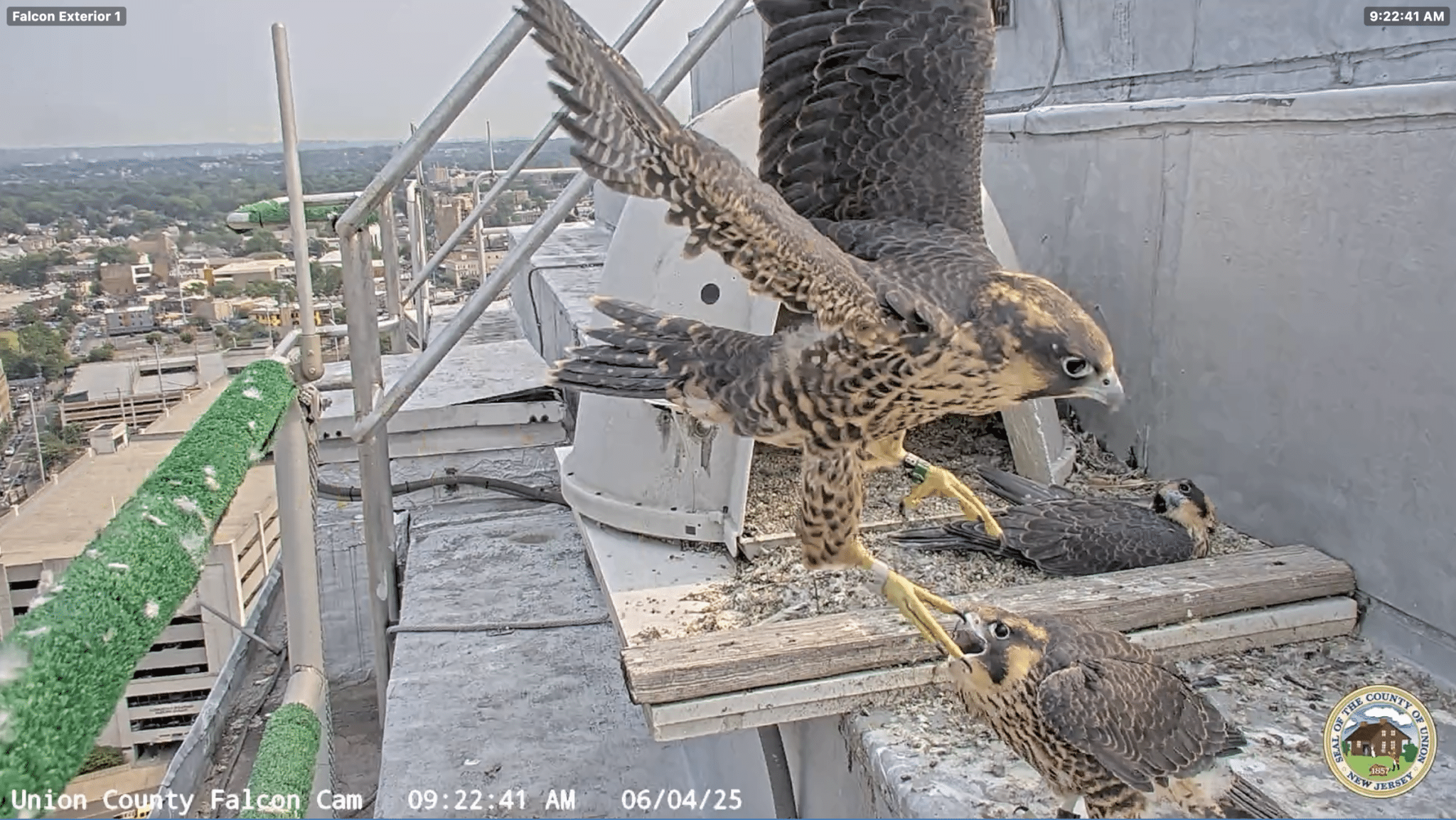
BN60, one of Union County’s newest female falcon chicks, is learning to fly and hunt her prey.  All four of the falcon chicks are all easily making their way around the roof and onto railings to perch, which is called branching.

This is an important time for them to hone their flight skills, especially landing and taking off.  Males can fledge as early as six weeks old.

This clutch, or group, of falcons contains three females and one male.  Once the falcon chicks do fledge, the adults will continue to provide food for them. Sometimes, they will transfer prey mid-air, which will also help the young develop hunting skills that they will use for the rest of their lives.

Categories
Updates

All four of the young falcons banded for future tracking

Now they’re all right around 5 weeks old and loosing their fluffy white down feathers very quickly. They are old enough to want to explore a bit more, as every day they leave their nest and explore the rooftop. This makes it much harder for us to track them with the camera.

Their first flights are not too far away. The male will fledge first. Usually they fledge at around 6-7 weeks and females at around 7-8 weeks. That means the male will be taking his first flight later next week and his oldest siblings the week after. This is a crucial time for them where life gets much more dangerous. As soon as they leave the protection of their nest then they can get into trouble. Navigating our human dominated landscape is not easy. There is a lot of infrastructure for them to navigate around. Buildings with lots of glass or mirror facades can trick their perception of the landscape, especially when they’re starting to pursue prey. But first, they need to practice those essential flight skills of mastering takeoff and landing. Either way, it is a joyous time to watch them grow!