Vice Chair
Rebecca Williams
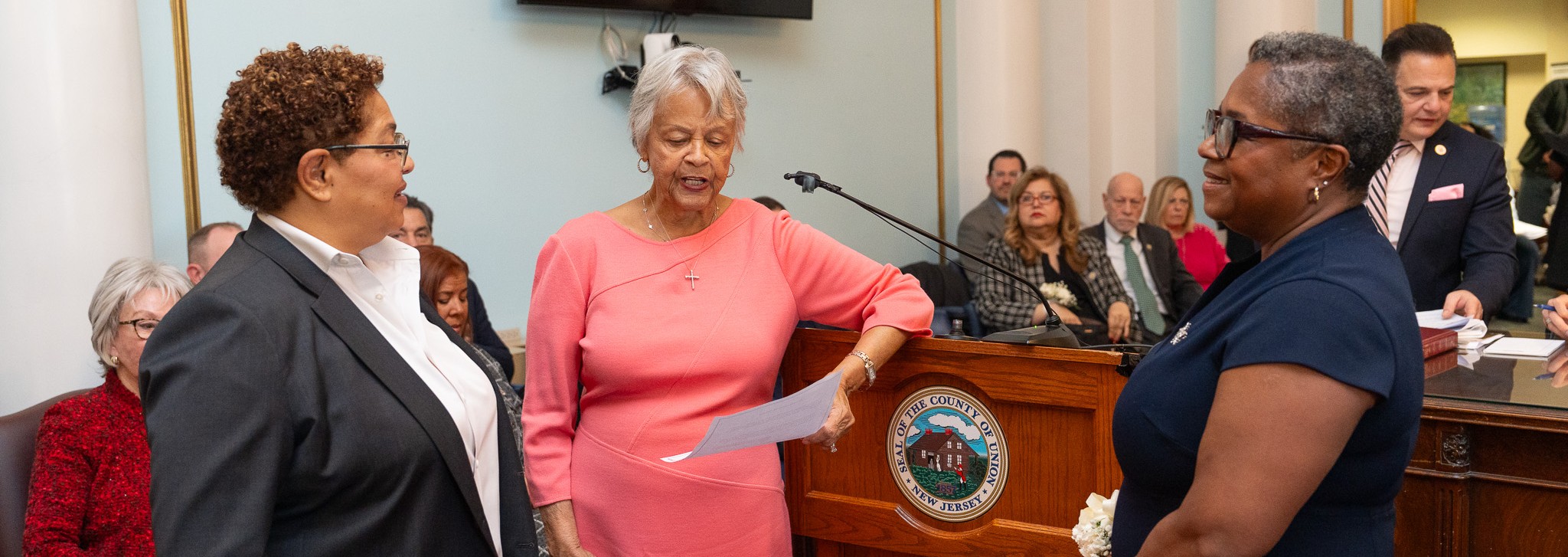
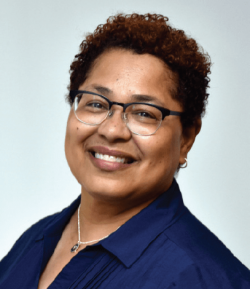
Vice Chair Rebecca L. Williams has served on the Commissioner Board since 2018, most recently winning reelection in 2025. In 2022, she served her first term as Chair of the Board.
For 2026, Commissioner Williams serves as Chair of the Board’s Policy and Administrative Code Committee, and as a member of the County Operations Committee. This year, she also serves as Chairperson of the Union County America 250 Committee, to help lead Union County’s commemoration of the 250 years of history since the American Revolution. In addition, she serves as liaison to the following advisory boards: Cultural and Heritage Advisory Board, Union County LGBTQ Ad Hoc Committee, Motion Picture & TV Advisory Board, and Green Brook Flood Control Commission.
Commissioner Williams, the first openly LGBTQ+ person to serve on the Union County Commissioner Board, has been in the forefront of community advocacy, working to address housing, senior services, education, health, public safety, community engagement, and other areas of concern. A frequent speaker on women’s and LGBTQ+ empowerment, Commissioner Williams has served on panels at the League of Municipalities, The Center for American Women and Politics at Rutgers’s Eagleton Institute, The National Council of Negro Women, and Social Justice Matters, Inc., among many other organizations.
Commissioner Williams prides herself on her openness and accessibility to all constituents. Known for an emphasis on constituent outreach, fiscal issues, support for arts and culture initiatives, and quality of life matters, Commissioner Williams advocates for county-local shared services that save tax dollars while improving efficiency. She remains a grassroots public servant, reaching out and following up with constituents to ensure their concerns are resolved.
Commissioner Williams is an Associate Professor of English in the Humanities and Bilingual Studies Division at Essex County College in Newark, where she teaches American Literature, Major Black American Writers, Literature and Film, Women’s Literature, Survey of the Novel, African American Cinema, and English Composition. Although her primary focus is 19th century American literature, her other academic interests include early American crime narratives, African American modernism, memoir, and speculative fiction.