Article below from By Patti Sapone | NJ Advance Media for NJ.com

Hannah Caldwell
“She was of so sweet a temper, so prudent, benevolent, and soft in her manners, that I verily believe she had not upon earth one personal enemy.”
That’s what her husband, the Rev. James Caldwell, said of his wife more than two centuries ago.
The pair married on March 14, 1763 and had nine children. Hannah was described as being medium height with a fair complexion, auburn hair and dark gray eyes.
Rev. James Caldwell

Reverend James Caldwell, the “Fighting Parson” of the American Revolution, was one of the most notable chaplains during the war, according to the Revolutionary War New Jersey website.
He was born in Virginia in April 1734. He graduated in 1759 from the College of New Jersey, now known as Princeton University. After graduating, he was ordained a minister and later became the pastor of the First Presbyterian Church of Elizabethtown.
When the war broke out, the Rev. Caldwell joined the Patriot Army and became chaplain of the New Jersey line.
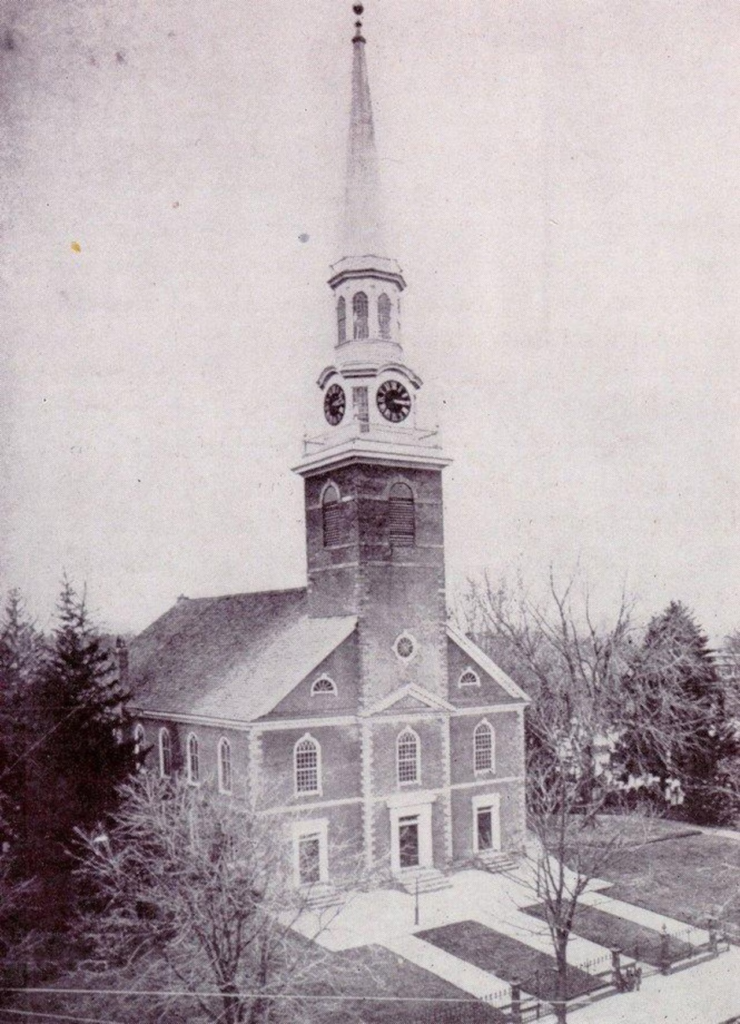
First Presbyterian Church of Elizabeth
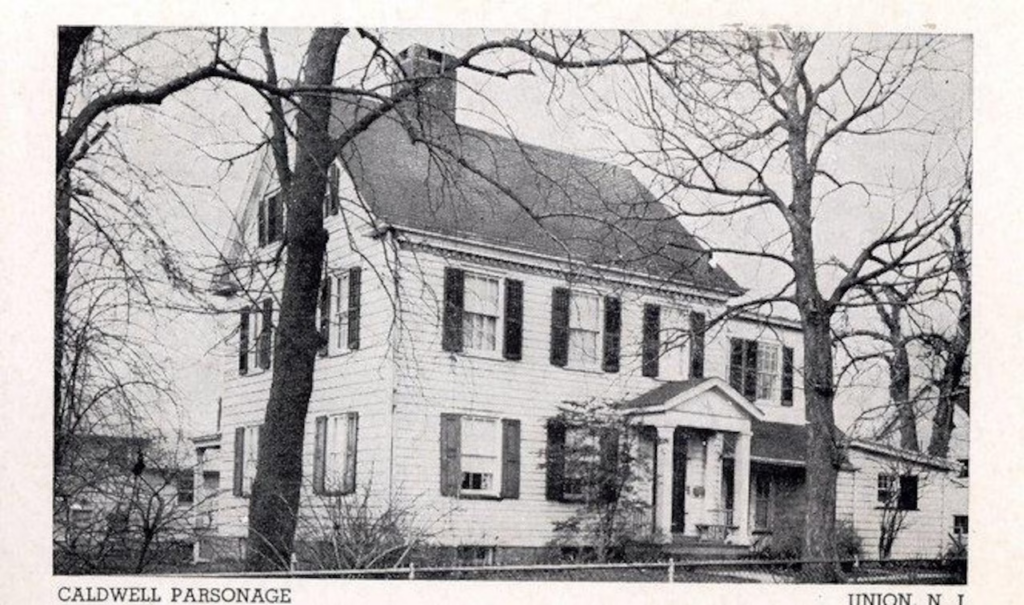
In early 1780, his church and home were burned down by Loyalists. He moved his wife and nine children to the parsonage, a home for the clergy members at Connecticut Farms in what is now known as Union Township.
The murder
On that fateful Wednesday, June 7, 1780, British troops passed through Connecticut Farms heading to Morristown in hopes of destroying Gen. George Washington’s camp where Rev. Caldwell was stationed.
The New Jersey militia were informed of their approach.
Caldwell wanted his wife, Hannah, to prepare to leave the parsonage with the children to accompany him to safety in Springfield, but she felt that she would not be harmed.
The Patriots fought back for several hours, firing from open doorways and windows but the British sent reinforcements and drove the Americans out of the town.
Hannah went to the back bedroom after her husband left, taking her four-year-old-son Elias, eight-month-old daughter, Maria, the infant’s nurse, Catherine Benward, and the young housekeeper Abigail Lennington. Hannah chose that room because she thought it to be the safest with only one window.
Lennington described what happened. A stocky soldier wearing a red coat left the road, then crossed diagonally to reach the house. Elias was constantly peering out the window at the British soldiers passing by. Lennington had been instructed to keep the boy away from the window, but she could not. So Hannah moved to pull him to safety at the precise moment the soldier approached and fired his musket. Seconds later, Hannah lay dead on her bed.
The Patriots were outraged by her murder and wanted revenge. They knew Rev. Caldwell was hated by the British for his fiery patriotic sermons and recruiting efforts and some colonists believed his wife was targeted for assassination.

Rev. James Caldwell at Battle of Springfield, “Give ’em Watts, Boys!”.
Two weeks later, the Rev. Caldwell found himself fighting British troops during the Battle of Springfield on June 23, 1780. While fighting, the Continentals ran low on paper wadding that was used to pack the power and ball in the musket.
Caldwell ran into the church, gathered hymnbooks published by English clergyman Isaac Watts and shouted “Give ’em Watts, boys!” as the soldiers tore up the pages to make wadding.
The painting by John Ward Dunsmore captioned “Battle of Springfield, New Jersey” depicts this historical moment. The original painting now hangs in Fraunces Tavern, in New York City, and a copy hangs in the Springfield Municipal Court.
Caldwell ran into the church, gathered hymnbooks published by English clergyman Isaac Watts and shouted “Give ’em Watts, boys!” as the soldiers tore up the pages to make wadding.
The painting by John Ward Dunsmore captioned “Battle of Springfield, New Jersey” depicts this historical moment. The original painting now hangs in Fraunces Tavern, in New York City, and a copy hangs in the Springfield Municipal Court.
The Rev. Caldwell’s murder
The following autumn, on Nov. 24, 1781, the Rev. Caldwell met the same fate as his wife.
He was shot and killed by James Morgan, an American soldier standing guard at the port of Elizabethtown, when Caldwell refused to have a package inspected. Morgan was arrested, put on trial and found guilty of the murder.
James Caldwell’s spirit is also believed to haunt the parsonage. Both Rev. Caldwell and Hannah’s remains now lay in the First Presbyterian Church cemetery in Elizabeth.
A plaque in her honor
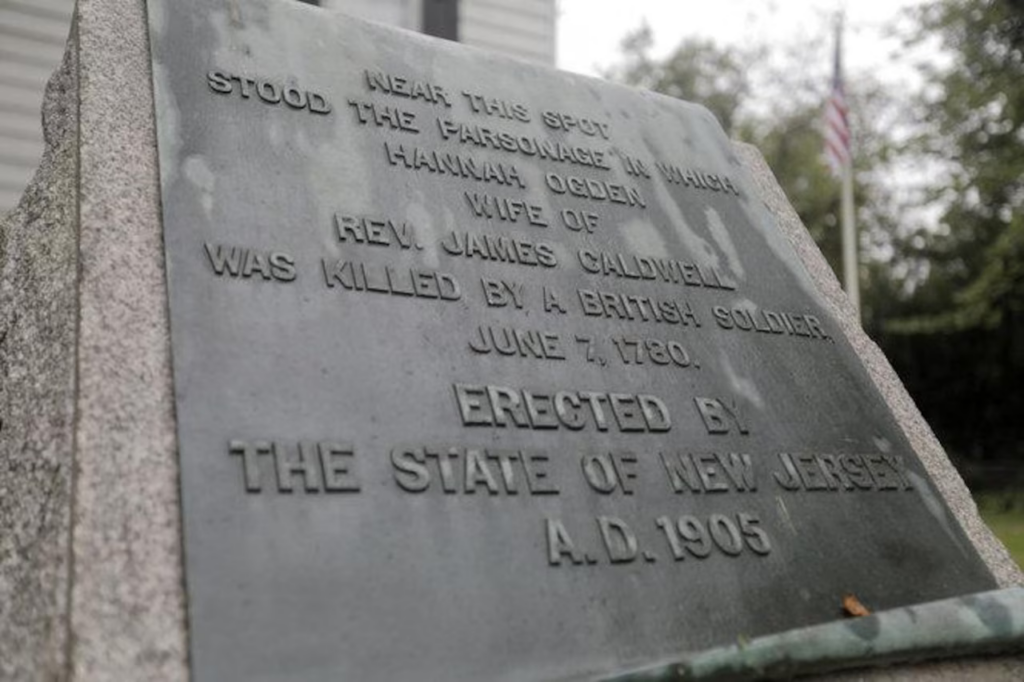
The death of Hannah Caldwell sparked widespread anger with Patriots and she became another symbol of the fight for independence.
“Some people don’t like the idea of a murder being the symbol of our county,” president of the Union Township Historical Society Barbara La Mort said. “Other people are proud of the fact that it’s unique and commemorates a significant historic event. Hannah was a courageous woman who stood her ground, knowing the enemy was approaching.”