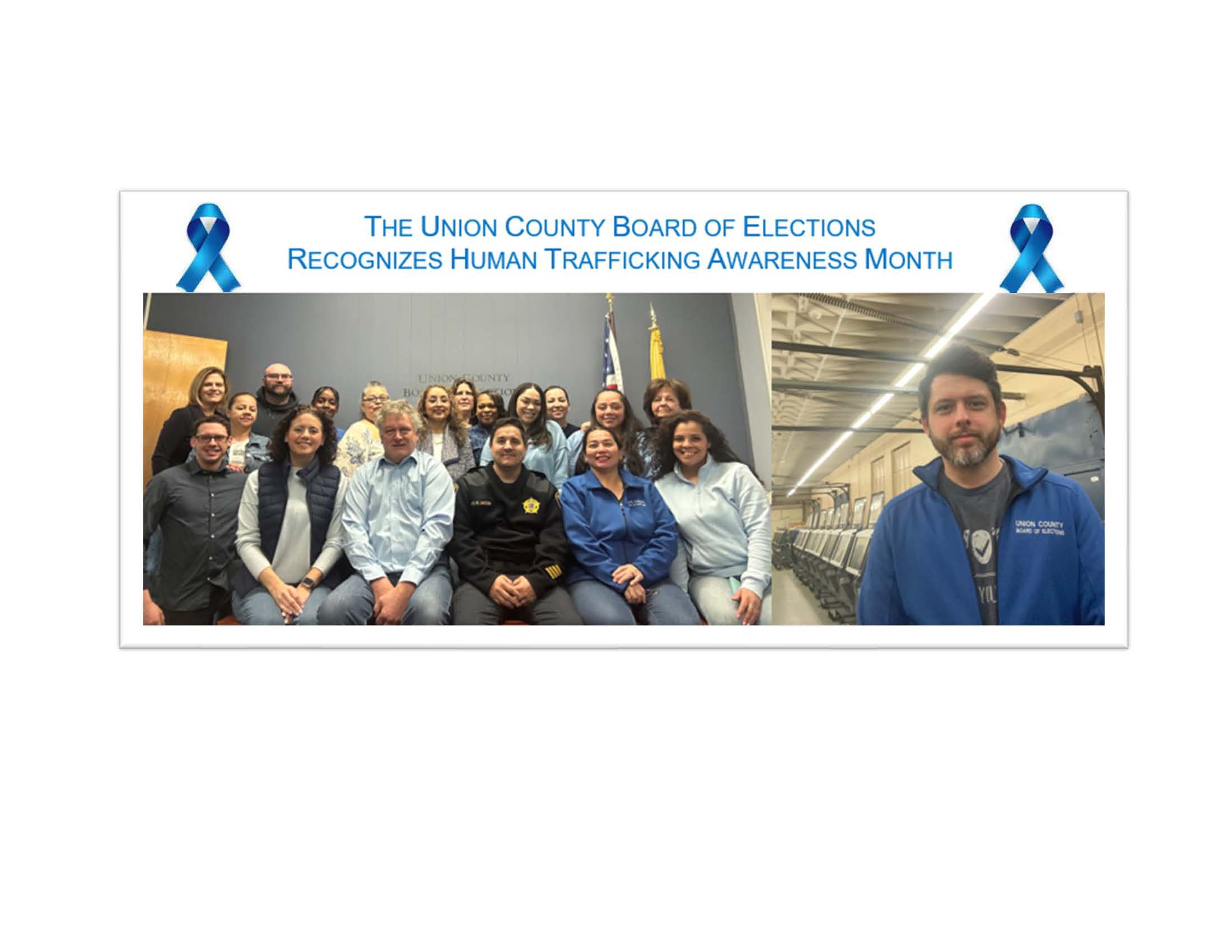
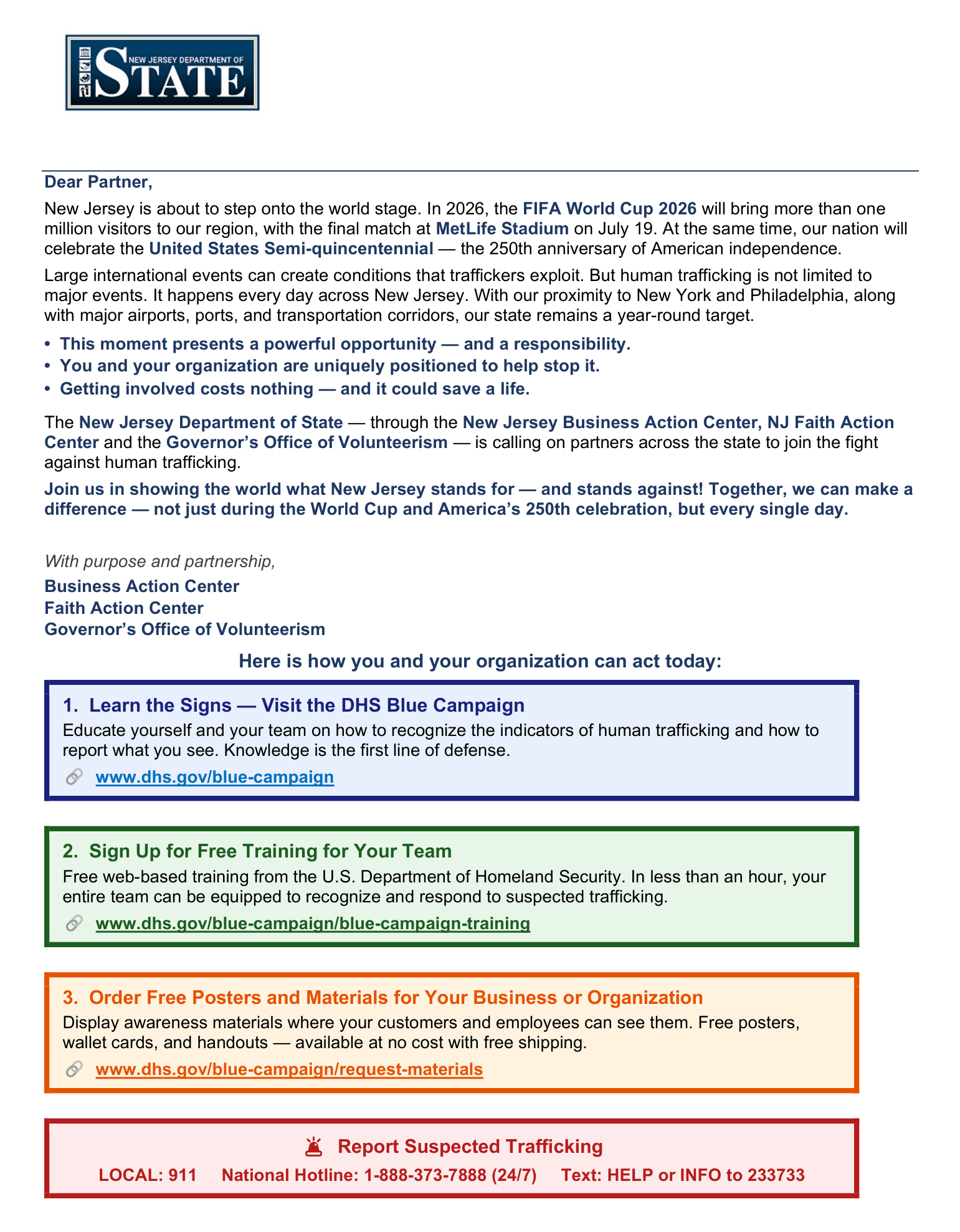

Submit your photos from the social media campaign
Get Help
24/7 and Confidential
Recognizing the Signs
As the U.S. anti-trafficking movement has grown in our understanding of this complex crime, we are learning more about how specific people, such as medical professionals, teachers, truck drivers, and restaurant personnel, in addition to friends and family members, can help identify and report possible trafficking.
Everyone can help by learning the types of trafficking and paying attention to the people around us.
Who is Most At Risk?
Anyone can experience trafficking in any community, just as anyone can be the victim of any kind of crime. Many societal factors can put people at risk. Traffickers recognize and take advantage of people who are at-risk.
People may be at-risk to trafficking if they
- Have an unstable living situation
- Have previously experienced other forms of violence such as sexual abuse or domestic violence
- Have run away or are involved in the juvenile justice or child welfare system
- Are facing poverty or economic need
- Have a caregiver or family member who has a substance use issue
- Are addicted to drugs or alcohol
Who Are the Traffickers
There is no evidence that traffickers are more likely to be of a particular background.
They may be family members, romantic partners, acquaintances, or strangers.
How Traffickers Lure People In
Stories become weapons in the hands of human traffickers — tales of romantic love everlasting or about good jobs and fair wages just over the horizon.
Sometimes, the stories themselves raise red flags.
Other times, traffickers or potential traffickers may raise red flags during recruitment.
Here are a few situations that might raise concerns
- A would-be employer refuses to give workers a signed contract or asks them to sign a contract in a language they can’t read.
- A would-be employer collects fees from a potential worker for the “opportunity” to work in a particular job.
- A friend, family member, co-worker, or student is newly showered with gifts or money or otherwise becomes involved in an overwhelming, fast-moving, and asymmetric (e.g., large difference in age or financial status) romantic relationship.
- A friend, family member, or student is a frequent runaway and may be staying with someone who is not their parent or guardian.
- A family member, friend, co-worker, or student is developing a relationship that seems too close with someone they know solely on social media.
- A family member, friend, or student lives with a parent or guardian and shows signs of abuse.
- A family member, friend, or co-worker is offered a job opportunity that seems too good to be true.
- A family member, friend, or co-worker is recruited for an opportunity that requires them to move far away, but their recruiter or prospective employer avoids answering their questions or is reluctant to provide detailed information about the job.
Recognizing Labor Trafficking
Labor trafficking includes situations where men, women, and children are forced to work through threats and/or violence.
Keeping victims isolated — physically or emotionally — is a key method of control in most labor trafficking situations.
But that does not mean you never cross paths with someone who is experiencing trafficking.
Someone may be experiencing labor trafficking or exploitation if they
- Feel pressured by their employer to stay in a job or situation they want to leave
- Owe money to an employer or recruiter or are not being paid what they were promised or are owed
- Do not have control of their passport or other identity documents
- Are living and working in isolated conditions, largely cut off from interaction with others or support systems
- Appear to be monitored by another person when talking or interacting with others
- Are being threatened by their boss with deportation or other harm
- Are working in dangerous conditions without proper safety gear, training, adequate breaks, or other protections
- Are living in dangerous, overcrowded, or inhumane conditions provided by an employer
Recognizing Sex Trafficking
Sex trafficking occurs when individuals are made to perform commercial sex through the use of force, fraud, or coercion.
Any child under 18 who is involved in commercial sex is legally a victim of trafficking, regardless of whether there is a third party involved.
Someone may be experiencing sex trafficking if they
- Want to stop participating in commercial sex but feel scared or unable to leave the situation.
- Disclose that they were reluctant to engage in commercial sex but that someone pressured them into it.
- Live where they work or are transported by guards between home and workplace.
- Are children who live with or are dependent on a family member with a substance use problem or who is abusive.
- Have a “pimp” or “manager” in the commercial sex industry.
- Work in an industry where it may be common to be pressured into performing sex acts for money, such as a strip club, illicit cantina, go-go bar, or illicit massage business.
- Have a controlling parent, guardian, romantic partner, or “sponsor” who will not allow them to meet or speak with anyone alone or who monitors their movements, spending, or communications.
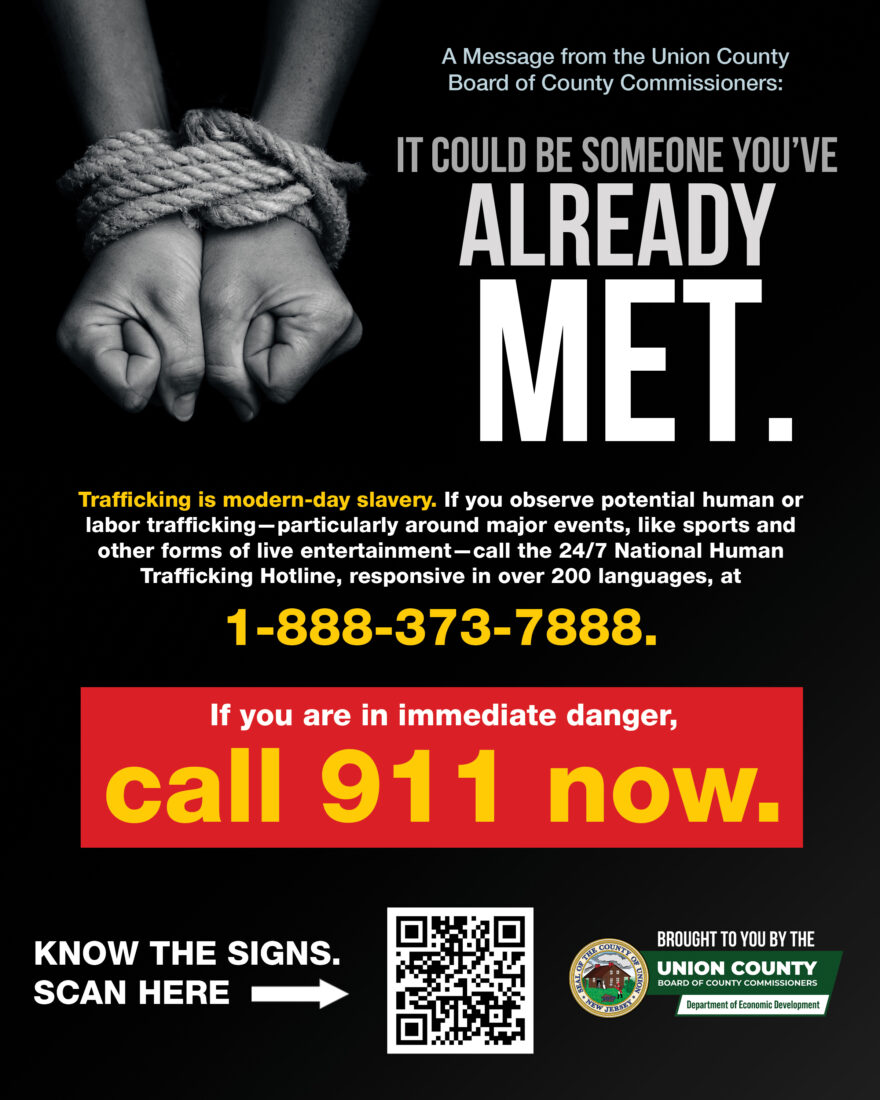
If you believe you are a victim of human trafficking or may have information about a potential trafficking situation, please contact the U.S. National Human Trafficking Hotline. If you or someone you know is in immediate danger, please call 911.
Awareness & Education
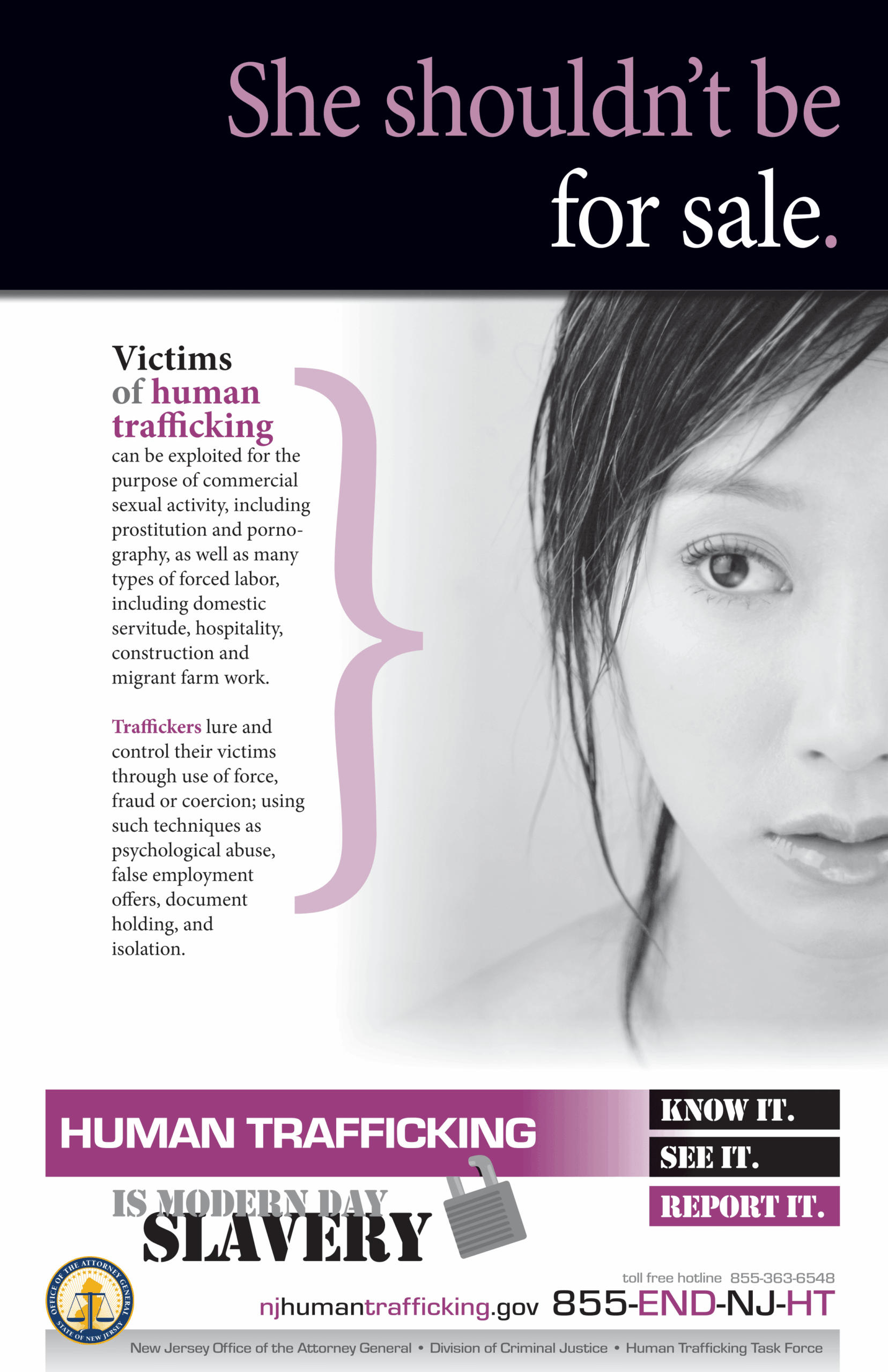
Human Trafficking Posters (11″x17″):
Available in English and Spanish


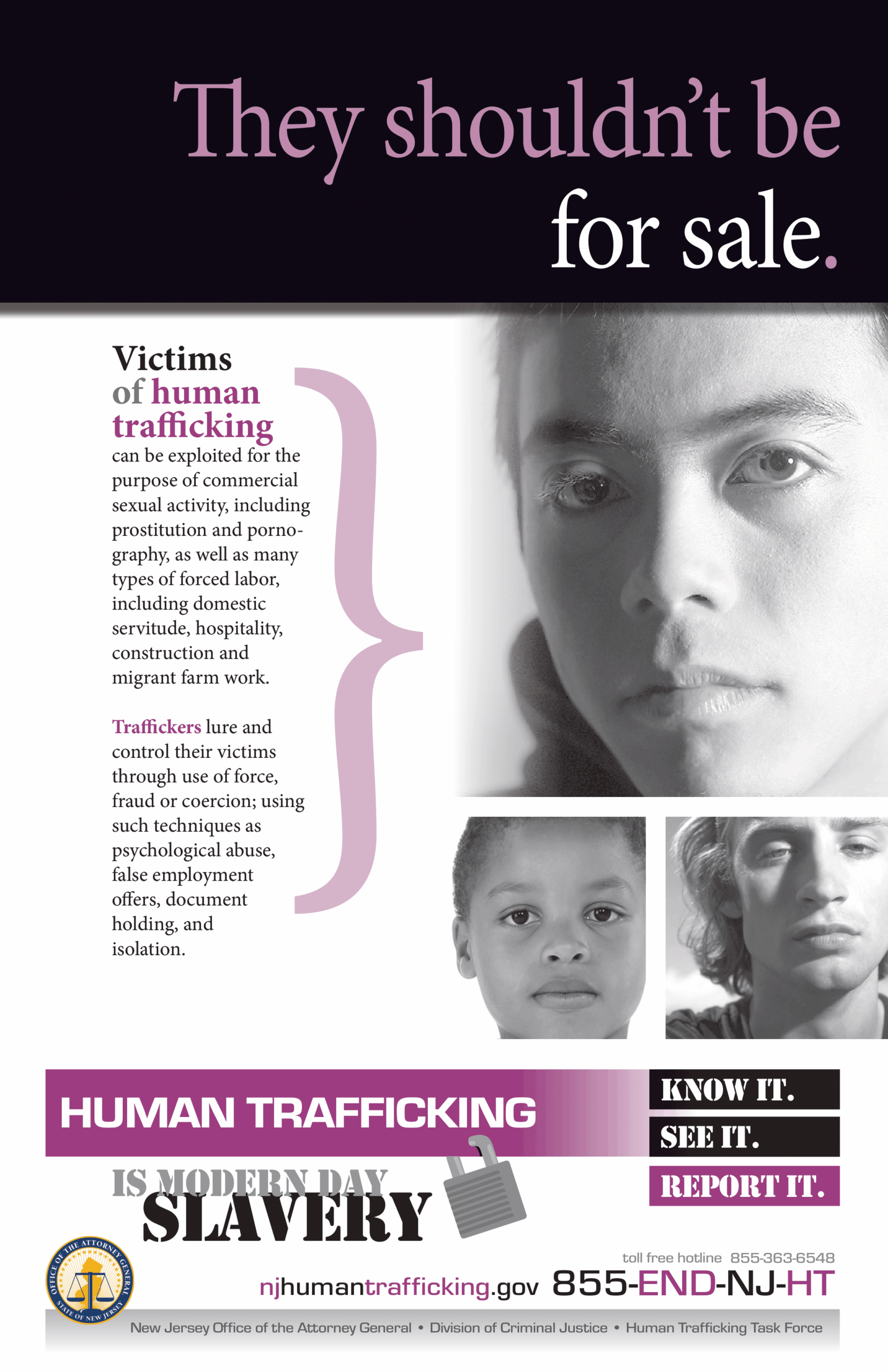

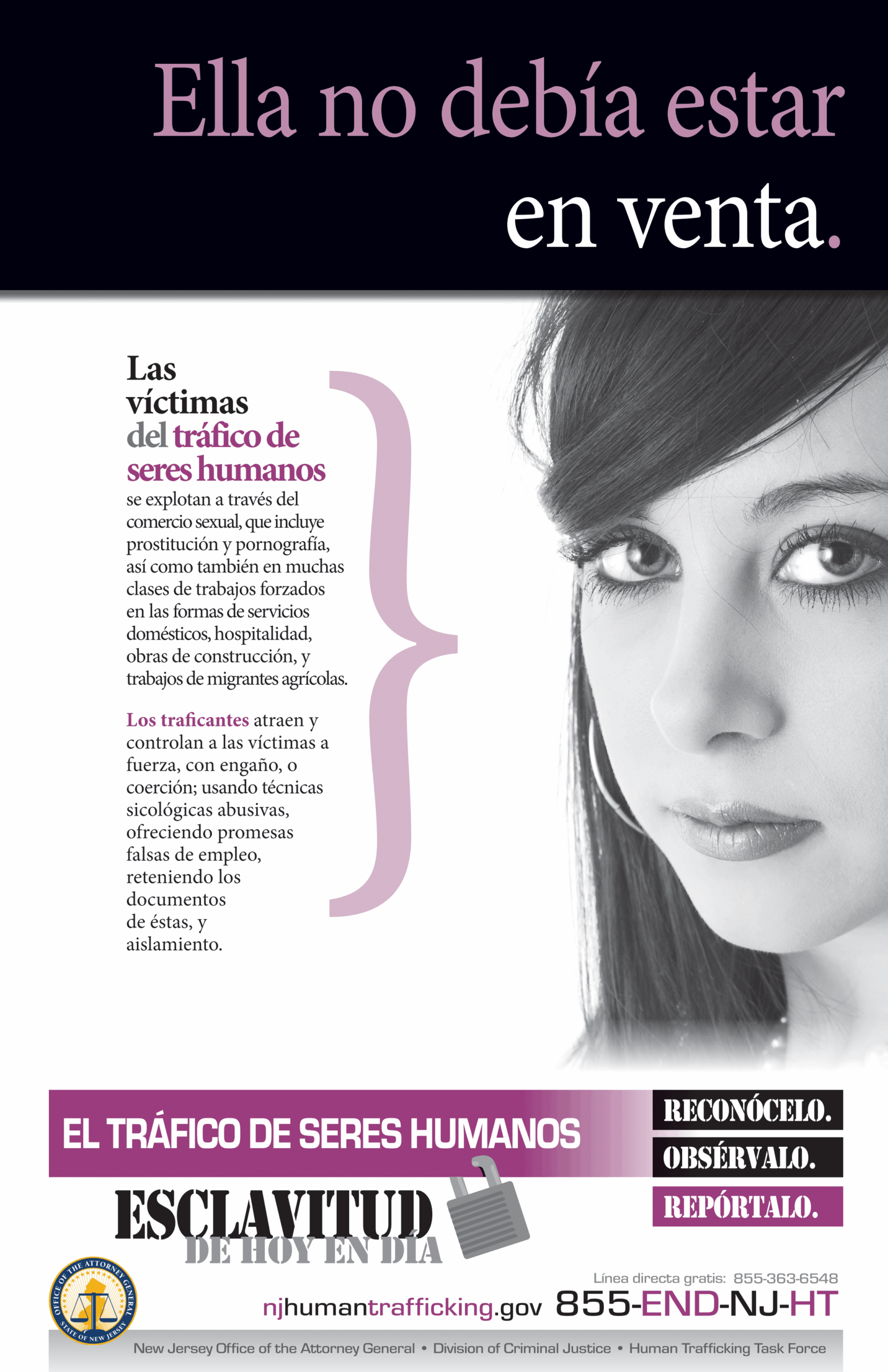


NJ Human Trafficking Task Force Brochure(8.5″x11″): English I Español
Human Trafficking Red Flags & Fact Sheets(8.5″x11″):
- 101 for School Administrators & Staff
- 101 for School Administrators & Staff – ESP
- Airline and Airport Workers
- Airline and Airport Workers – ESP
- EMS, Fire Department, Law Enforcement & Other Emergency Care Professionals
- EMS, Fire Department, Law Enforcement & Other Emergency Care Professionals – ESP
- Health Care Provider Assessment Card
- Health Care Provider Assessment Card (coming)
- Hospitality Professionals
- Hospitality Professionals – ESP
- Identifying Victims of Human Trafficking
Potential Indicators & Red Flags - Identifying Victims of Human Trafficking
Potential Indicators & Red Flags – ESP - Indicator Card for Schools
- Indicator Card for Schools (coming)
- Taxi, Limousine and Public Transporation Drivers
- Taxi, Limousine and Public Transporation Drivers – ESP
- Understanding Victims’ Mindsets
- Understanding Victims’ Mindsets – ESP
- What to Look for During a Medical Exam/Consultation
- What to Look for During a Medical Exam/Consultation – ESP
How to Identify Victims
Investigate Tips
Victims you identify and assist may help in the prosecution and conviction of their traffickers. The questions below may help you identify a human trafficking victim:
- What type of work do you do?
- Are you being paid?
- Can you leave your job if you want to?
- Can you come and go as you please?
- Have you or your family been threatened?
- What are your working and living conditions like?
- Where do you sleep and eat?
- Do you have to ask permission to eat/sleep/go to the bathroom?
- Are there locks on the doors/windows so you cannot get out?
- Do you have possession of your identifying documents? If not, who does?
If you are not in a position to question a potential victim of human trafficking, look for the following clues:
- Evidence of being controlled
- Evidence of inability to move or leave job
- Bruises or other signs of physical abuse
- Fear or depression
- Not speaking on own behalf or non-English speaking dominated by English speaking individual(s).
- No passport or other forms of identification or documentation
Share this:
- Click to print (Opens in new window) Print
- Click to email a link to a friend (Opens in new window) Email
- Click to share on Facebook (Opens in new window) Facebook
- Click to share on Bluesky (Opens in new window) Bluesky
- Click to share on X (Opens in new window) X
- Click to share on WhatsApp (Opens in new window) WhatsApp
- Click to share on Threads (Opens in new window) Threads
- Click to share on LinkedIn (Opens in new window) LinkedIn